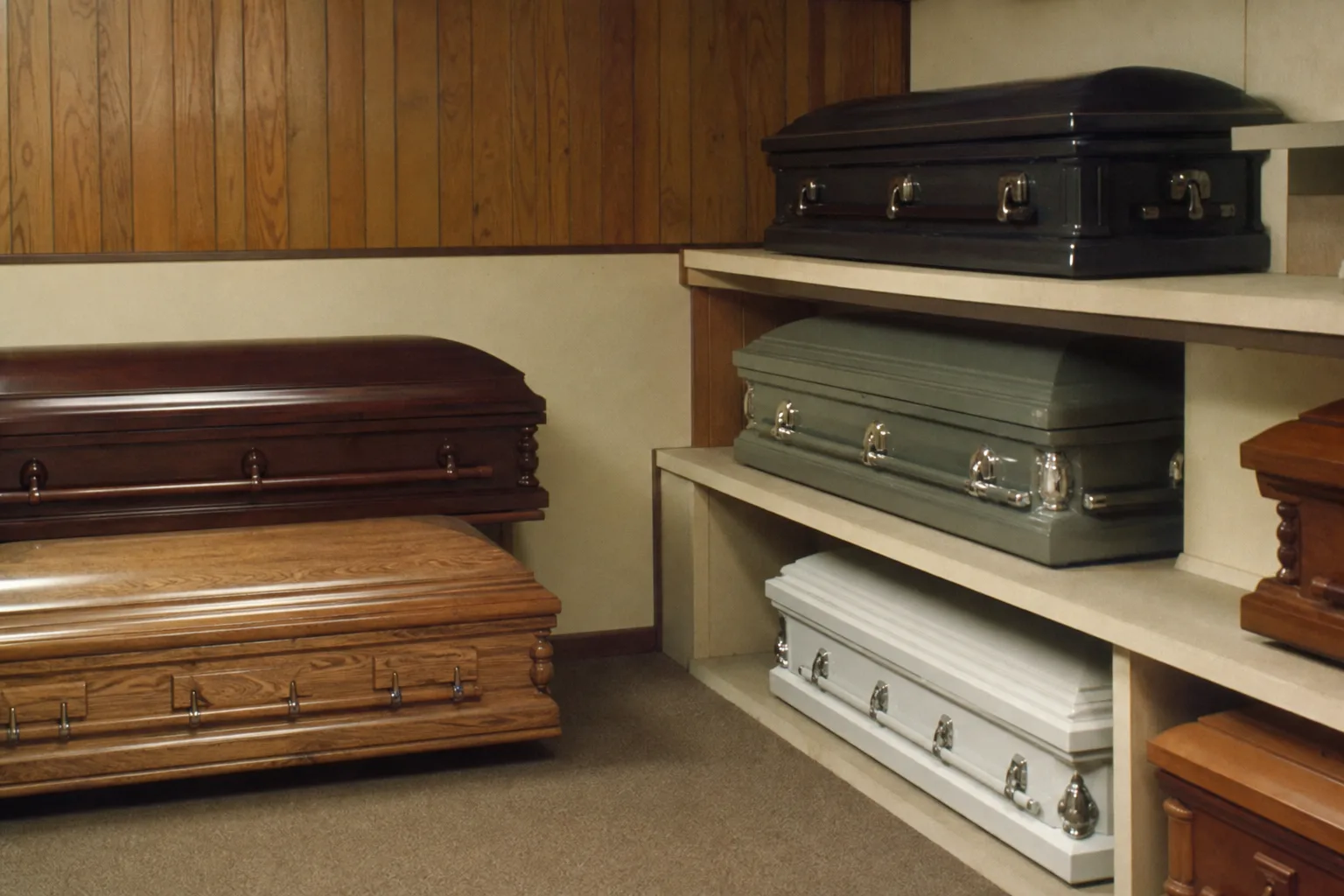
A casket price list gives you a species, a gauge number, a finish, and sometimes a single word about sealing, and each of those is a physical claim you can test against the object in the showroom. Some of them describe a real, measurable difference in material. Others describe a feature whose effect stops at the surface of the ground. The buyer who reads the card carefully, asks two or three follow-up questions, and looks at the corner joints and the lid edge will pay for the right things and skip the rest.
Gauge numbers run backwards, and the difference is thin
Steel gauge measures thickness on an inverted scale, so a lower number means thicker metal: 16-gauge steel is heavier than 18-gauge, and 18-gauge is heavier than 20-gauge, which is the most common weight in the lower and middle of most price lists. The step between each gauge is small in absolute terms, a matter of fractions of an inch, but it changes how the shell feels, how it resists denting in handling, and how much the finished casket weighs when six people carry it. Thicker steel also holds a deeper, more even finish, because the panel flexes less during forming. That is a real difference, and it is the one gauge honestly describes.
What a careful reader checks is whether the gauge is stated at all. Cards that say only steel, or protective steel, are describing a category rather than a thickness, and the salesperson can tell you the number if you ask. Press a palm gently on the middle of the lid on two caskets in the same room and you will feel the difference between 20 and 18 without any special knowledge. Ask also whether the finish is a painted enamel or a brushed or polished natural metal, since that accounts for a large share of the price gap between two shells of identical thickness.
What the gasket does, and where it stops
A gasketed casket has a rubber or synthetic strip running along the mating edge of the lid, usually paired with a crank-operated mechanism that draws the lid down against it. The assembly is sometimes called protective or sealing, and physically it does exactly what the parts suggest: it resists the entry of air and outside water at the seam, for some period, under conditions nobody can specify in advance. It does not preserve a body, and it cannot be sold to you on that basis. The Federal Trade Commission oversees funeral disclosure practices, and sellers are not permitted to claim that any casket or feature will preserve remains indefinitely.
The practical question is narrower than the marketing suggests. Ask what the gasket adds to the price of that exact model, since the same shell is often offered in gasketed and non-gasketed versions with the difference stated plainly. Ask, separately, whether the cemetery requires an outer burial container, because the concrete or lined vault around the casket is the thing that keeps the grave from settling, and that is a cemetery requirement rather than a casket feature. Those are two different purchases doing two different jobs, and confusing them is how people spend twice for one outcome.
Hardwood is a botanical term, not a grade
Poplar is classified as a hardwood, and it is also light, soft, pale, and inexpensive, which is why it sits at the bottom of most wood sections and takes stain readily enough to be finished in the color of something costlier. Oak, ash and maple are denser and show pronounced grain. Cherry, walnut and mahogany are the top of most lines, priced for scarcity, color and the way they finish, not for any structural advantage underground. Solid wood, veneer over a wood core, and a wood-look finish on composite panel are three different constructions that can look nearly identical at eight feet.
So check the lid at its cut edge, look at how the corners meet, and lift the interior panel at the head end if the salesperson will allow it. Ask directly whether the piece is solid throughout or veneered, and ask what the hinges, hardware and interior fabric are, since a swing-bar handle cast in metal and a stamped one carry different costs. Everything above the finish line is what mourners see. Everything below it is joinery, and joinery is where the honest part of a wood casket's price actually lives.
Take the price card home, write the gauge, species, construction and gasket status next to each candidate, and compare the same four facts across sellers. The differences that survive that exercise are the ones worth paying for.